 Skip to main content


What Does Makeup Primer Do? The RMS Guide to Priming for a Radiant Base
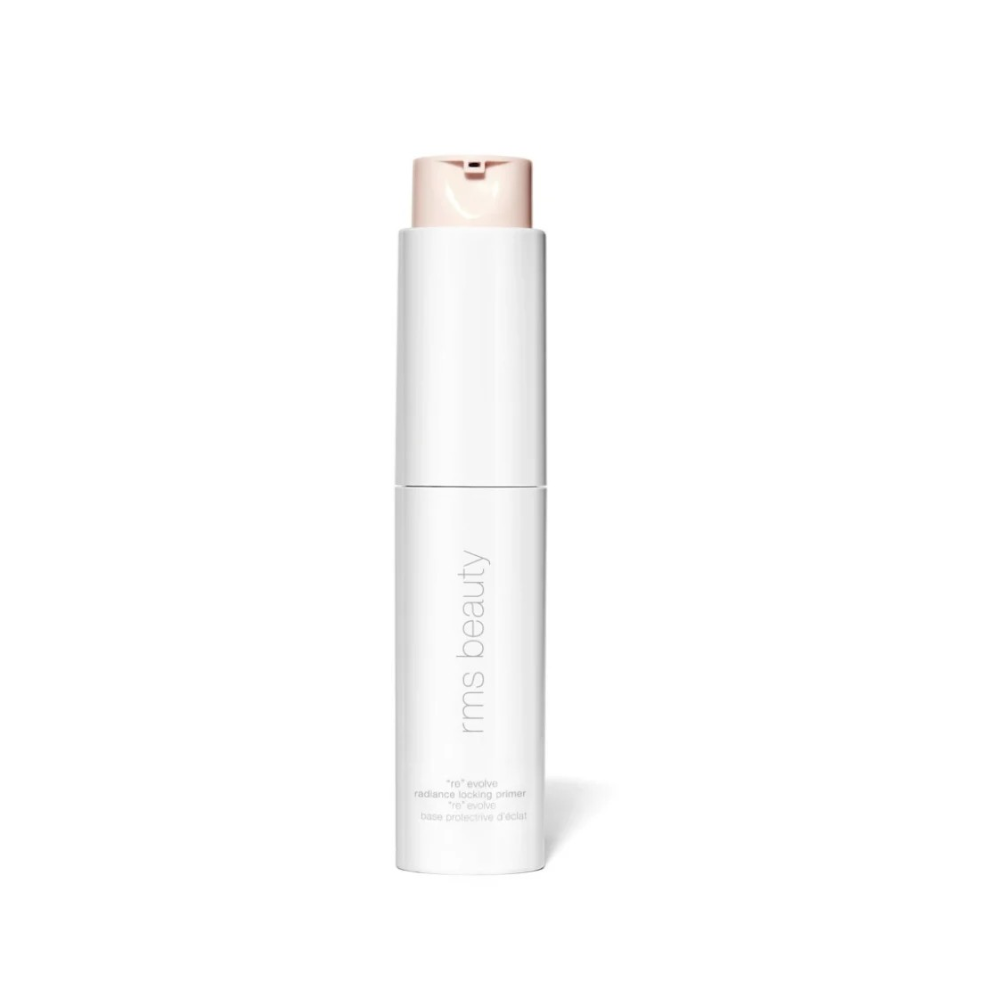
Makeup primer sits between your skincare and your makeup, and its job is to make everything on top of it work better. It smooths the surface of your skin, gives foundation and concealer something to hold onto, and helps your makeup stay put through the day instead of sliding into fine lines by noon.
That's the short answer. The longer answer to what a makeup primer does depends entirely on what's in it.
What Is Face Primer, Really?
A face primer, or makeup primer, is a base layer applied after moisturizer and before complexion products. Some are silicone-heavy and work by filling in texture, like spackle. Others are skincare-forward and work by hydrating, so makeup has a plump, even surface to sit on.
That difference matters. A primer you leave on your skin for twelve hours should be doing something good for it, not just creating a barrier. That’s why ReEvolve Radiance Locking Primer was built with hydration and grip in mind. If it's touching your face all day, the ingredients need to earn their place.
What Does Makeup Primer Do for Your Skin and Your Makeup?
Four things, mostly.
It creates a smoother canvas. Pores, fine lines, and dry patches all catch pigment differently. A primer evens out that surface so foundation goes on uniformly instead of pooling in some spots and skipping others. Press ReEvolve Natural Finish Liquid Foundation over a primed face and you'll see the difference in how it sits around the nose and chin.
It extends wear. Makeup applied straight onto bare or freshly moisturized skin has nothing to grip. Oil breaks it down, and the day does the rest. Primer gives it a stable base to bind to, which matters most for the products you blend into skin rather than layer on top, like UnCoverup Concealer.
It manages how your skin behaves. Hydrating primers keep dry skin from drinking up foundation and going patchy. If your skin is especially thirsty, a few spritzes of SuperSerum Hydrating Mist before primer gives you a plumper surface to start from. Grip-focused formulas help makeup stay in place on skin that runs oily.
It builds glow from underneath. This is the part people miss. A luminous base gives you radiance that reads as skin rather than as product, because the light comes from below your foundation instead of sitting on top of it. Master Radiance Base is the artist's version of this: Rose-Marie developed it for on-set work, and it goes under or over foundation to build light exactly where it naturally falls. On deep skin tones it warms and illuminates without ashiness. On fair skin tones it reads as a soft, dewy lift.
Do You Actually Need a Foundation Primer?
Not always. If you're wearing a sheer tinted moisturizer on a day you're mostly indoors, you can skip makeup primer entirely.
But a foundation primer earns its spot when you want your makeup to last through a long day, when your skin is dry or textured enough that foundation clings unevenly, or when you want a lit-from-within finish rather than a flat one. It also does quiet work for minimalists: prime well, and you often need less foundation to get the same result. Fewer, better things, applied to your routine as much as your shelf. Our Primer & Base collection is deliberately small for that reason.
How to Use Makeup Primer
Knowing how to use makeup primer is mostly about restraint and timing.
- Start with clean, moisturized skin. Let your moisturizer or serum absorb for a minute first. Layering primer onto wet skincare causes pilling.
- Use less than you think. A pea-sized amount of a formula like ReEvolve covers the whole face. More product doesn't mean more grip.
- Press, don't rub. Warm it between your fingers and press it into skin, working outward from the center of your face. Fingers beat brushes here.
- Focus where you need it. Center of the face, around the nose, anywhere you get texture or wear-off.
- Wait 30 to 60 seconds. Let it set before foundation. This one step prevents most primer-related pilling.
If your makeup still isn't holding, the problem is usually the order or the quantity, not the makeup primer itself. You can see how the full base layers together across our Complexion lineup.
Frequently Asked Questions
Do you put primer on before or after moisturizer?
After. Moisturizer is skincare and goes closest to clean skin. Primer is the bridge between skincare and makeup, so it comes next. Give your moisturizer 30 to 60 seconds to absorb before you apply primer, otherwise the two can pill and roll.
Can you wear makeup primer alone, without foundation?
Yes, and it's one of the better no-makeup makeup moves. A radiance-building primer like ReEvolve evens out tone and adds a soft glow on its own. Add concealer only where you want it and you have a finished face in about a minute.
How much makeup primer should I use?
About a pea-sized amount for the whole face. Primer works by forming a thin, even layer, so using more doesn't improve grip. It usually causes pilling instead, especially under liquid foundation.
Does makeup primer clog pores?
It depends on the formula. Heavy silicone-based primers can feel occlusive on congested skin. Formulas built around skin-loving ingredients, applied in a thin layer and removed properly at the end of the day, are a different story. Always double-cleanse if you're wearing a full base.
What's the difference between a primer and a setting spray?
Primer goes underneath and prepares the surface, improving how makeup applies and adheres. Setting spray goes on top and locks the finished look in place. They solve different problems, and using both is normal for a long day.
Not Sure Which Base Is Right for Your Skin?
Book a free Artist Advice session and talk it through with one of our Artist Advisors, who will match you to the right primer, foundation, and shade for your skin type and tone.
Shop The Blog


ReEvolve Radiance Locking Primer


ReEvolve Natural Finish Liquid Foundation


UnCoverup Concealer

